EIPH in Horses: Is Lasix a Solution or a Symptom Mask?
Exercise-Induced Pulmonary Hemorrhage (EIPH) is one of the most talked-about issues in the performance horse industry. And yet, most conversations stop at management, not understanding.
We most often hear:
- “Give Lasix.”
- “Run a BAL.”
- “Do allergy testing.”
- “Start allergy shots.”
But what if those aren’t answers, just temporary control measures? The real question we should be asking is: Why does this horse have respiratory issues in the first place?
Understanding EIPH Beyond the Lungs
EIPH is often treated as a lung problem. But the body doesn’t work in isolated systems. The lungs don’t fail on their own, they reflect deeper internal imbalances.
Modern research is beginning to support what many holistic systems have long understood:
- Inflammation weakens capillary integrity
- Oxidative stress damages lung tissue
- Vascular pressure increases during exertion when systems are compromised
Studies have shown that:
- Chronic systemic inflammation can weaken pulmonary capillaries, making them more prone to rupture under stress
- Diets high in processed feeds, sugars, and pro-inflammatory oils increase inflammatory cytokines
- Oxidative stress and inflammation together reduce tissue resilience and recovery
So while Lasix reduces bleeding by lowering blood pressure and fluid volume…It does not address why the capillaries were vulnerable to begin with.
The Missing Link: Diet and Inflammation
One of the most overlooked contributors to EIPH is diet. Highly processed feeds, chemical exposure, and inflammatory ingredients create internal stress long before symptoms appear.
From both a modern and TCM perspective, this leads to:
- Gut dysfunction
- Poor nutrient absorption
- Increased systemic inflammation
- Fluid imbalance
In TCM terms, this is described as:
Spleen Weakness → Dampness → Phlegm → Lung Obstruction
Let’s break that down.
The TCM Perspective: A System in Imbalance
1. The Spleen: The Root of Digestion and Blood Production
In Traditional Chinese Medicine, the Spleen is responsible for:
- Transforming food into energy and nutrients
- Managing fluid metabolism
- Producing Blood
When horses are fed:
- Processed feeds
- Inflammatory ingredients
- Chemically treated inputs
The Spleen becomes weakened.
This leads to:
- Poor nutrient absorption
- Improper fluid transformation
- Reduced production of healthy blood
2. Dampness Accumulates
When fluids aren’t properly processed, they accumulate.
This is known as Dampness. Over time, Dampness thickens into:
Phlegm
This isn’t just visible mucus, it’s a deeper pathological accumulation that can:
- Obstruct airways
- Reduce oxygen exchange
- Create chronic respiratory stress
3. The Lungs Become Compromised
With Phlegm obstructing the system:
- The lungs cannot fully expand
- Oxygen exchange becomes inefficient
- Pressure increases during exertion
Now add high-speed performance demands…This is when capillaries rupture.
The Trickle Effect: It’s Not Just the Lungs
Once this imbalance begins, it doesn’t stay isolated.
Kidneys
- Help regulate temperature and fluid balance
- In TCM, control exhalation
When impaired (from stress, diet, or repeated Lasix use):
- Fluid balance becomes unstable
- Blood viscosity can be affected
Too cold? Blood thickens and stagnates.
Too hot? Blood becomes too thin.
Liver
- Responsible for smooth blood flow
When the Liver is stagnant:
- Blood does not move efficiently
- The body struggles to meet sudden performance demands
This is critical in high-intensity disciplines where rapid oxygenation and circulation are required.
Why Conventional Approaches Fall Short
Procedures like:
- BAL (Bronchoalveolar Lavage)
- Allergy testing
- Airway-support supplements
…can provide insight or temporary relief. But they often miss the root cause: A systemic imbalance driven by inflammation, digestion, and organ dysfunction. These approaches tend to act as band-aids, not solutions.
How ActivateQi Approaches EIPH
We don’t start with the lungs. We start with the foundation.
Step 1: Remove the Cause
- Transition to an anti-inflammatory diet
- Eliminate processed, inflammatory ingredients
- Reduce chemical exposure where possible
This alone can dramatically reduce systemic stress.
Step 2: Restore Digestion (Support the Spleen)
A strong digestive system:
- Produces healthy blood
- Properly manages fluids
- Prevents Dampness accumulation
Products:
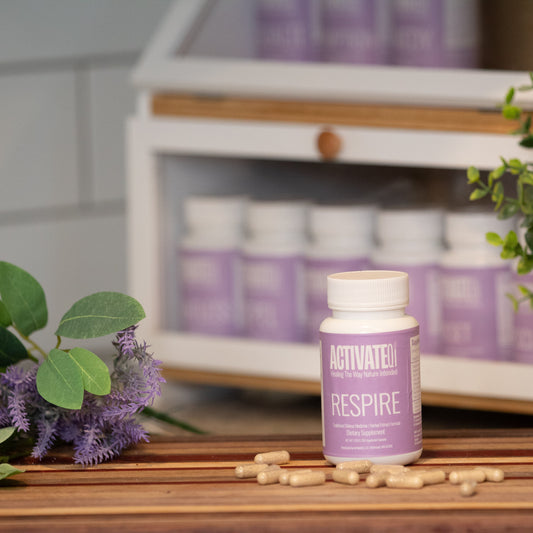
Step 3: Support the Lung–Kidney Axis
In TCM:
- Lungs control inhalation
- Kidneys control exhalation
When these work together:
- Breathing becomes deeper and more efficient
- Airway inflammation decreases
Product:
Step 4: Address Environmental Stressors
Even a balanced horse can struggle in:
- Congested barns
- High-dust environments
- Travel or competition stress
Support as needed:
The Bigger Picture
EIPH is not just a bleeding disorder. It is a signal. A signal that:
- The body is inflamed
- Systems are not communicating properly
- The foundation needs rebuilding
Lasix may reduce symptoms…But true resolution comes from asking: What created the environment where this could happen?